
Osteoporosis and Exercise: Why Movement is Medicine for Bone Health
Written by Peter Sharp and Harold Chow.
Osteoporosis is often called a “silent disease” as it does not present with any symptoms. For many Australians, the first sign of poor bone health is a fracture that occurs with minimal trauma, such as a simple fall or even a minor twist. Uncertainty and fear of fractures can follow a diagnosis of osteoporosis, but with good management and the right exercise this needn’t be the case.
What Is Osteoporosis?
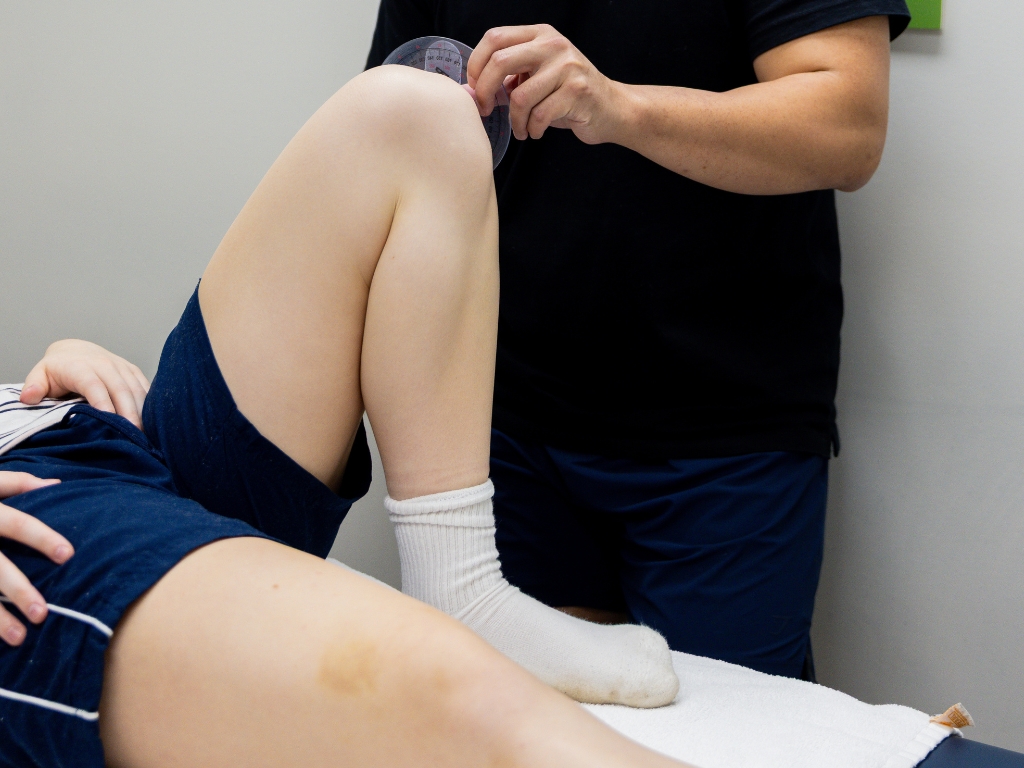
Osteoporosis and osteopenia are conditions of reduced bone density.
- Osteopenia is a condition of low bone density, where bone strength is below normal.
- Osteoporosis is a more advanced condition where bone density is further reduced
Both conditions are associated with a higher risk of fractures. More than half of fractures actually occur in people with osteopenia, making early identification and management essential.
How Is Osteoporosis Diagnosed?
Osteoporosis is diagnosed using a dual-energy X-ray absorptiometry (DXA) scan, which measures bone mineral density (BMD). The results are reported as a T-score, which compares an individual’s bone density to that of a healthy young adult.
Understanding your T-Score
- Normal bone density: T-score of -1.0 or above
- Osteopenia: T-score between -1.0 and -2.5
- Osteoporosis: T-score of -2.5 or lower
The more negative the T-score, the lower the bone density and the higher the fracture risk.
While T-scores are central to diagnosis, they are not the whole story. A person may be diagnosed with osteoporosis even without a T-score below -2.5 if they have:
- A minimal trauma fracture (e.g., from a fall from standing height or less)
- Significant risk factors such as long-term corticosteroid use or certain medical conditions
Fractures: The Real Consequence
While low bone density itself is asymptomatic, fractures can lead to disability, loss of independence, and mortality.
In Australia:
- 105,000 hospitalisations occurred due to minimal trauma fractures in 2021–22 among people aged 45+
- 28% of these were hip fractures, which carry particularly high morbidity and mortality
- In 2023 alone, there was one fracture every 2.7 minutes
- Over 2.1 million fractures (new and re-fractures) are estimated to occur over the decade from 2024–2033
Fractures carry serious consequences beyond the break itself. Mortality in the first year after a significant minimal trauma hip fracture in people aged over 60 is up to three times higher than in age-matched peers. Many people are unable to return to independent living following a hip fracture.
Lifetime fracture risk is substantial: 2 in 5 women and 1 in 4 men over 50 will experience a minimal trauma fracture. Importantly, osteopenia contributes substantially to fracture risk: 52% of all minimal trauma fractures in people aged 50+ occur in those with osteopenia, not osteoporosis, highlighting a critical window for early intervention.
The Scale of Osteoporosis
Osteoporosis and osteopenia represent a significant and growing public health issue in Australia. According to the Australian Institute of Health and Welfare, around 853,600 Australians (3.4% of the population) were living with osteoporosis or osteopenia in 2022.
More recent and comprehensive modelling suggests the prevalence may be higher. The 2024 Healthy Bones Australia Burden of Disease report found that 6.2 million Australians aged 50 and over (approximately 67% of that age group) were living with poor bone health. Of those affected, 77% had osteopenia and 23% had osteoporosis.
Women are disproportionately affected, particularly after menopause. Men account for a significant and often under-recognised proportion of cases also. Projections show that refracture rates among men aged 70 and older will increase by 31% between 2024 and 2033, outpacing the 25% increase projected for women in the same age group.
Exercise as Treatment
Traditionally, people with osteoporosis were advised to avoid high-intensity or impact-based exercise due to fear of fracture. However, contemporary evidence has fundamentally shifted this perspective.
Bone is a dynamic tissue that responds to mechanical load and low bone density can improve in response to the right kind of loading. To stimulate bone formation, exercise must be:
- Weight-bearing (you need to be on your feet)
- Progressively overloaded (Exercises need to get gradually harder/heavier)
- High intensity and/or impact-based
Activities such as walking, swimming, cycling and yoga, while beneficial for general health (cardiovascular, metabolic, and mental health), are generally insufficient to significantly improve bone density.
The LIFTMOR Trial
One of the most influential studies into exercise for osteoporosis is the Australian LIFTMOR (Lifting Intervention for Training Muscle and Osteoporosis Rehabilitation) trial.
This randomised controlled trial investigated the effects of high-intensity resistance and impact training (HiRIT) in postmenopausal women with osteopenia or osteoporosis. Participants completed twice-weekly, 30-minute supervised sessions over 8 months.
The results were compelling:
- Lumbar spine bone density increased by ~2.9%
- Femoral neck (hip) bone density improved, while controls lost bone
- Significant improvements were also seen in strength and functional performance
Crucially, the program was safe when supervised, with no increase in fracture risk reported.
The LIFTMOR trial demonstrated that appropriately prescribed high-intensity exercise is not only safe, but necessary for improving bone health.
Putting research into practice: The ONERO® Program
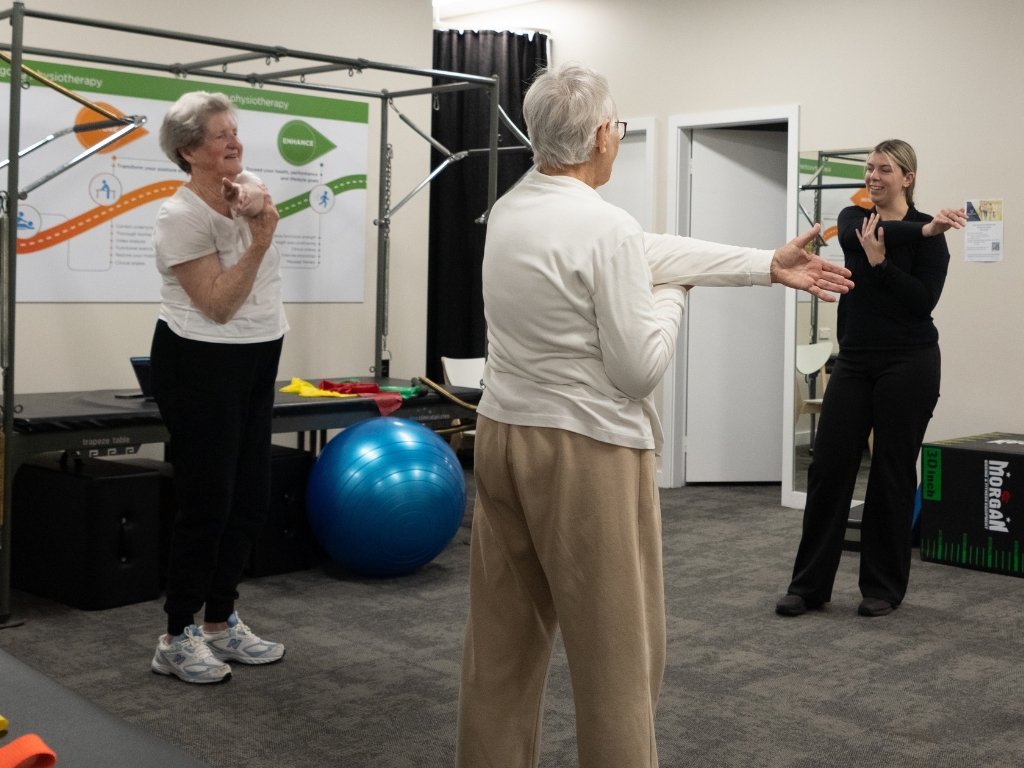
The findings of the LIFTMOR trial have been translated into clinical practice with the ONERO® program, developed in Australia, by Professor Belinda Beck.
ONERO® is a structured, supervised exercise program specifically designed for individuals with osteoporosis or osteopenia.
- High-intensity resistance training (weights, barbell exercises)
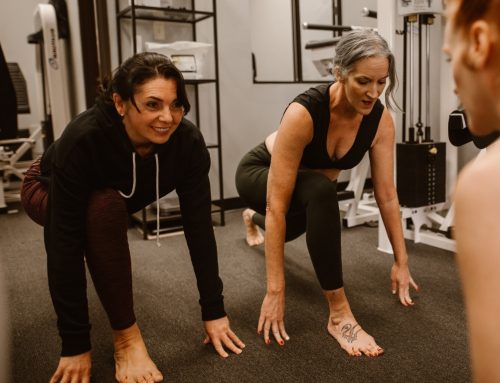
- Impact loading (e.g. controlled jumping/landing)
- Balance exercises
- Progressive overload (as you get stronger the load must increase)
- Close supervision by ONERO® licensed and trained professionals
Importantly, ONERO® emphasises technique, progression, and safety, making it suitable for people with low bone density.
Want to learn more about Onero®? Read more here, or contact us on (02) 4234 4666.
Gerringong & Kiama Physiotherapy are the only clinics offering the Onero® program in the Illawarra and south coast region. Peter Sharp and Harold Chow are our Onero® licensed physiotherapists, providing a safe and supportive environment for people looking to begin their exercise journey to manage low bone density.
References:
- Australian Institute of Health and Welfare (2024). Osteoporosis and minimal trauma fractures. Australian Government. aihw.gov.au
- Australian Bureau of Statistics (2023). National Health Survey 2022. abs.gov.au
- AIHW (2014). Estimating the prevalence of osteoporosis in Australia. Cat. no. PHE 178.
- Bohingamu Mudiyanselage S, Watts JJ, Gebremariam K, Abimanyi-Ochom J (2024). Osteoporosis and fractures in Australia: A burden of disease analysis 2023–2033. Healthy Bones Australia / Deakin Health Economics.
- Wong PKK et al. (2025). 2024 RACGP and Healthy Bones Australia guideline for osteoporosis management and fracture prevention. Medical Journal of Australia, 222(9). doi:10.5694/mja2.52637
- Watson SL, Weeks BK, Weis LJ, Harding AT, Horan SA, Beck BR. High-intensity resistance and impact training improves bone mineral density and physical function in postmenopausal women with osteopenia and osteoporosis: The LIFTMOR randomized controlled trial. Journal of Bone and Mineral Research. 2018;33(2):211–220. doi:10.1002/jbmr.3284
- Harding AT, Weeks BK, Lambert C, Watson SL, Weis LJ, Beck BR. A comparison of bone-targeted exercise strategies to reduce fracture risk in middle-aged and older men with osteopenia and osteoporosis: LIFTMOR-M semi-randomized controlled trial. Journal of Bone and Mineral Research. 2020;35(8):1404–1414. doi:10.1002/jbmr.4019